
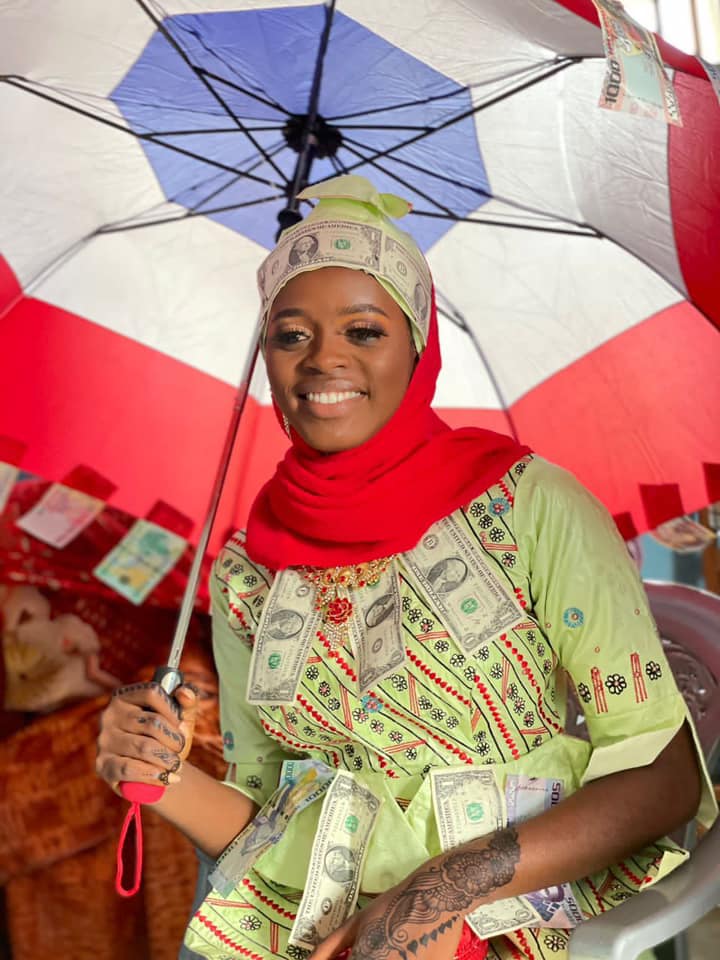
The Fulani or Fula people are reputably known for their rich traditions and simplistic lifestyle. One of the largest ethnic groups in West Africa, their beautiful description and outlook on weddings is worthy to write about. Ever witnessed the familiar and lovely sight of a woman holding an umbrella with banknotes dotted about? Well, like the tradition of the calabash, ‘Jombereh’ as it is usually called is the name of the umbrella ritual and it is marred with a lot of symbolism.
The Jombereh or Dhowtutughol umbrella tradition forms part of the many ritual rites of Fulani weddings. It is an age-old practice that has evidently been recognized and observed in today’s nuptials. It can be originally identified with the Fulani people although the global shift has casually allowed for cultural appropriation. Hence, you may witness a Madingo or a Susu practicing the umbrella tradition. There are identifiably two pieces of symbol in the Jombereh wedding tradition: the umbrella and the cash.
Umbrella – The umbrella signifies shelter, comfort, protection, and security. Practically, the umbrella protects us from the heavy pelting of the rains or the harsh smile of the sun. Consequently, the umbrella can be portrayed in that regard. It means the bride has found herself in the protection and security of her husband (groom). In addition, it symbolizes the transitioning of the woman from her roof or conclave to her husband’s abode. Further interpretation means submission to her husband.
Money – Umbrellas aren’t that expensive, right? Thus, the reason for the adorning of cash. Adding banknotes adds weight to the value of the bride. It indirectly signifies the valuable worth of the prospective bride. The currency that is used may depend on the status of the groom and his family. Nevertheless, whether the umbrella is decorated with Leones or Dollars, the representation in the Jombereh wedding practices remains the same: value or desirability.